
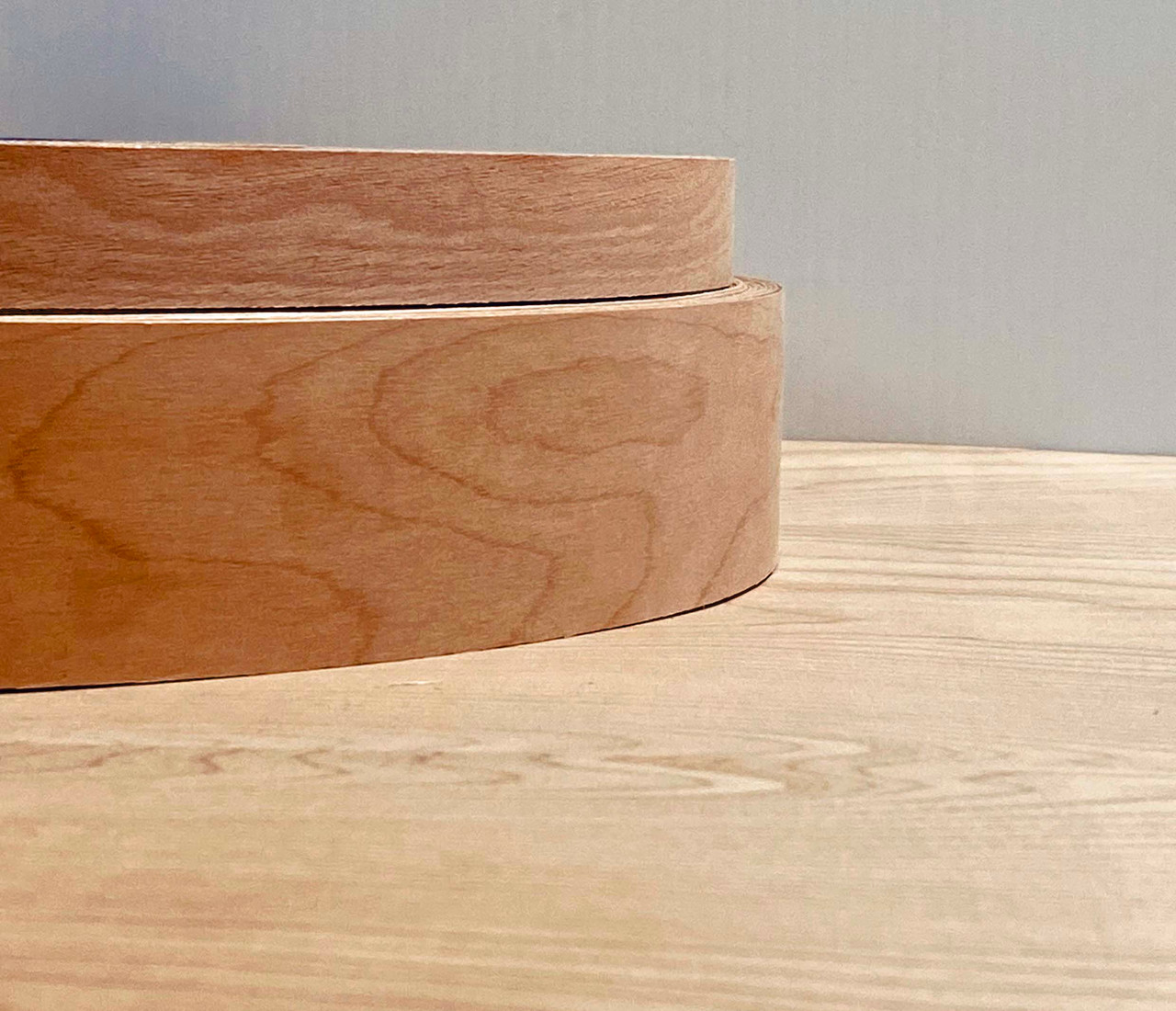

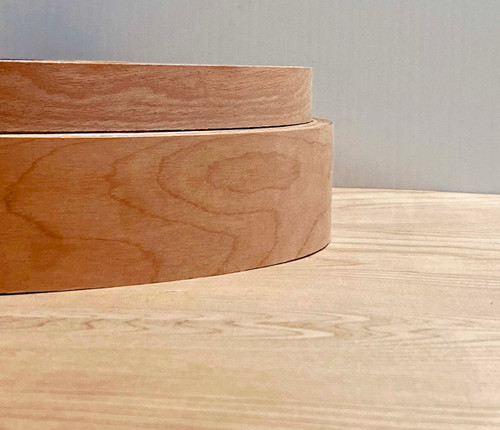
Natural Birch Real Wood Edgebanding
Short overview
- Real birch veneer edgebanding in a warm, light natural grain—ideal for cabinet faces, shelving, furniture edges, and trim where a genuine wood look is required.
- Available in three widths: 7/8", 1", and 2".
- Two backer options to suit different installation methods and projects: Hot Melt Glue (iron-activated, 250' rolls) and Fleece Backer (more flexible, usually installed with contact cement, 500' rolls).
Why woodworkers and DIYers choose this edgebanding
- Authentic appearance: real birch veneer provides natural grain, consistent color, and ability to stain or finish to match surrounding work.
- Versatile widths: narrow widths for thin veneers and small trim; 2" for thicker panels and visible edges.
- Two installation options: fast iron-on application for quick jobs, or fleece back for complex curves and high-flex needs.
- Cost-effective roll lengths: 250' or 500' rolls minimize joins on larger jobs and reduce downtime for shop projects.
Product features & specs
- Finish: raw natural birch (can be stained, lacquered, or oiled).
- Widths: 7/8" (22 mm), 1" (25 mm), 2" (50 mm).
- Backers:
- Hot Melt Glue Backer: EVA hot-melt adhesive; iron-activated; 250 linear feet per full roll.
- Fleece Backer: fabric/fleece backing for increased flexibility; installed with contact cement; 500 linear feet per full roll.
Installation guidance (best practices)
- Surface prep: ensure surfaces are clean, dry, and free of dust/oil. Rough-sand smooth laminate or painted surfaces to promote adhesion.
- Hot Melt Glue Backer (iron-on):
- Use a household or woodworking iron set to medium-high; cover the edgeband with a cotton cloth during ironing to protect the veneer.
- Move the iron in a slow circular motion along the band; do not hold in one spot to avoid scorching.
- After heating, press firmly with a roller or block to ensure full contact and eliminate bubbles.
- Trim excess with a sharp utility knife, then sand lightly for a smooth finish.
- Fleece Backer (contact cement):
- Apply a thin, even layer of contact cement to both the panel edge and the back of the edgeband.
- Allow both surfaces to become tacky (per cement manufacturer instructions, usually a few minutes).
- Carefully align and press edgeband onto surface; smooth out air bubbles with firm pressure or roller.
- Trim and sand edges as above.
- Corners & end caps: use heat/pressure (hot-melt) or careful clamping (fleece) to wrap around small radii; pre-bend or score backing for tight corners.
Finishing & care
- Stain, lacquer, varnish, or oil as desired. Test finish on scrap to confirm color match.
- Avoid excessive heat or moisture exposure at edges; maintain consistent environment to reduce movement.
Applications
- Kitchen cabinet doors and drawer fronts
- Furniture edges (tables, desks, shelving)
- Retail fixtures and cabinetry
- Repairing and renewing damaged veneer edges
- DIY projects where real wood appearance is desired without solid-wood cost
Ordering considerations
- Choose Hot Melt Glue Backer (250') for quick iron-on installations and fast production runs.
- Choose Fleece Backer (500') for flexible edges, curved applications, and when longer roll length is needed to reduce joints.


